Plan in autumn; act on local conditions
This spring 2027 planning guide is published in autumn 2026 so you can document the property before winter hides its drainage features. It does not predict the date or severity of the 2027 thaw. Use local forecasts, municipal notices and your property's past experience to decide when to repeat the checks.
A useful spring plan answers three questions: where does outside water collect, which systems move it away, and who will assess a problem if those systems are not working? Write the answers down now, while access and visibility are better.
Make a simple runoff map
Sketch the house, driveway, low yard areas, accessible drains and downspout outlets. Add the sump discharge location if there is one. Mark places where water collected last spring and any basement area that became damp. Keep photographs with the sketch so you can compare conditions after snow cover disappears.
Do not infer the route of a buried pipe from the direction of a surface puddle. If you do not know where a drain leads, label it as unknown and ask a contractor to identify it. That small distinction can prevent a quotation from being based on an assumption.
Before meltwater starts to collect
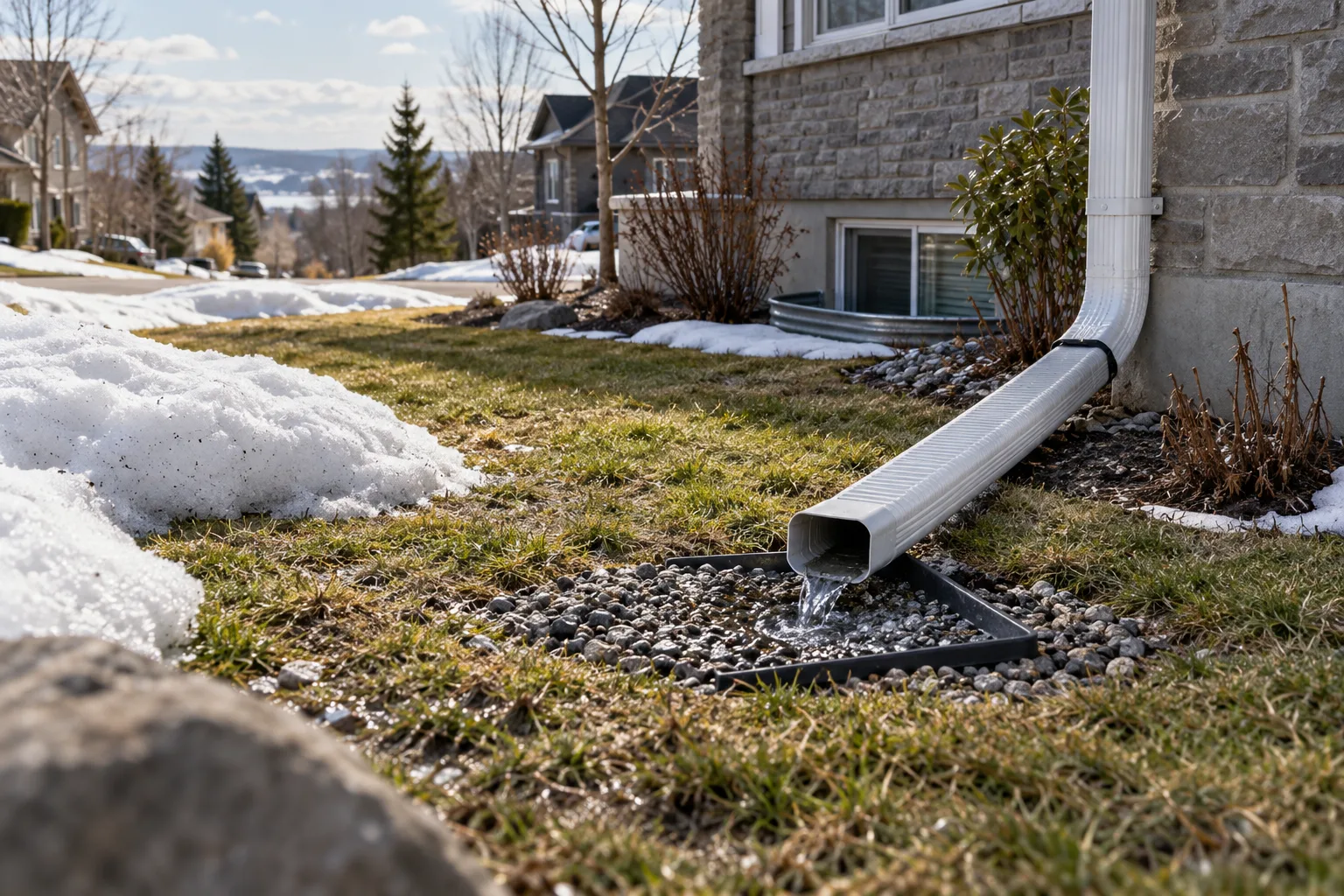
The Government of Canada's flood-preparation guidance recommends keeping gutters and downspouts clear, directing downspout water at least two metres from the foundation, and grading away from the home. It also advises preparing an emergency plan and following local alerts. Adapt drainage changes to municipal requirements and your property's layout rather than redirecting water onto a neighbour.
- Review the autumn photographs and locate surface drainage features before planning snow storage or yard work.
- Keep a list of areas that cannot safely be accessed while icy. Ask for professional help instead of climbing or lifting heavy covers.
- Check the date and result of the most recent sump-system test. Follow the manufacturer's maintenance schedule and review backup readiness.
- Keep important records and stored belongings out of previously wet basement areas.
- Save the municipality's flood-reporting contact and your contractor's service number somewhere accessible without searching online.
The value is in identifying unresolved items early. If you never found the outlet of a problem drain last year, put that investigation on the list before another wet season.
If water appears in the basement
Record the location and timing only if you can do so safely. Does it appear at a wall, a crack, a window well, or a floor drain? Was it raining, thawing, or happening during ordinary fixture use? These details are useful for the contractor, but they are not a diagnosis.
Stay out of floodwater and away from wet electrical equipment. Do not step into water to operate an electrical panel or pump. Follow local emergency instructions and seek professional assistance for active flooding or suspected sewage. Address immediate safety before documenting damage or comparing repair quotes.
Ask for a diagnosis before choosing a repair
Tell the contractor about previous work, including drainage cleaning, landscaping changes and basement repairs. Ask them to explain what they observed, what remains uncertain and whether a drain-tile or sewer inspection would resolve that uncertainty. Request the report or recording when an inspection is carried out.
For a proposed repair, ask which problem it addresses, how the result will be checked, and what access or reinstatement is included. Drainage-line repair, changes to surface drainage and a larger drainage installation are different jobs. A quote should make the distinction clear.
Turn the findings into next autumn's checklist
After the assessment, update the runoff map with confirmed routes and completed work. Keep invoices, photographs and follow-up recommendations together. Repeat photographs from the same safe positions during a later rain event to help discuss whether the problem has changed.
For preparation earlier in the season, use our winter 2026–2027 drain-tile guide and sump-pump readiness checklist. If the issue is loss of tap water during cold weather, see the separate frozen-pipe prevention guide.