Start before the first cold night
A winter plumbing plan is easier to put together while everything is working. Use this checklist in autumn 2026, revisit it during cold spells, and keep it with your household maintenance records through spring 2027. It is a preparation guide, not a forecast of how severe the coming winter will be.
Start with a simple distinction: water-supply pipes bring clean water to fixtures; drains carry used water away. A tap that produces little or no water points to a different investigation than a sink that fills normally but drains slowly. Describe the symptom accurately when requesting help so the right professional and equipment arrive.
Your pre-freeze walkthrough
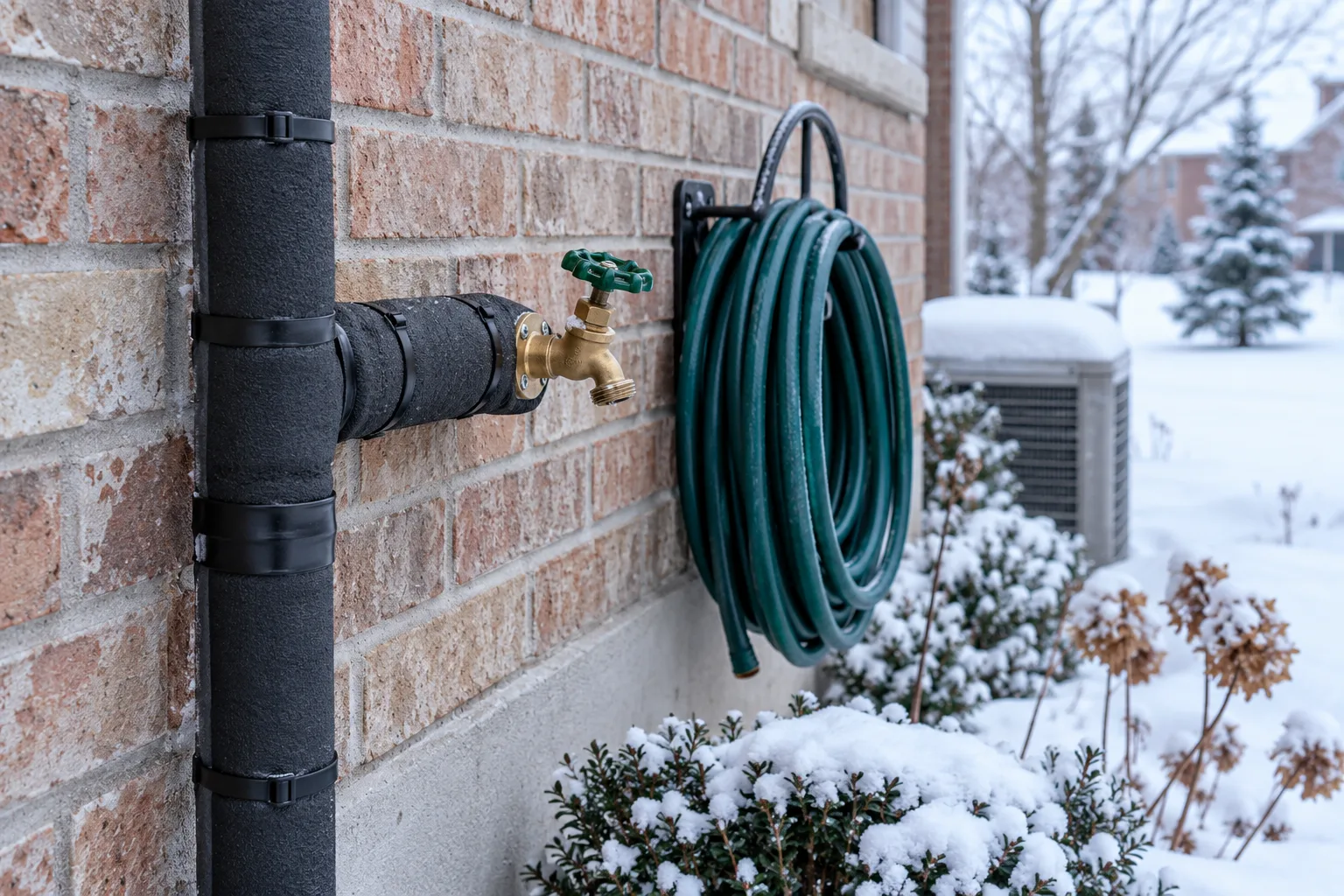
Toronto's frozen-pipe guidance highlights vulnerable lines near exterior walls and in unheated spaces. Its prevention advice includes insulating exposed pipes, sealing cold-air leaks, disconnecting hoses and draining outdoor supplies, and keeping the home warm. Never use an open flame to thaw a pipe. Read the City of Toronto's prevention and thawing guidance for the full instructions.
- Make a room-by-room list of fixtures that have frozen or lost flow in previous winters. Include the date, outside conditions and any repairs.
- Locate and label your main water shutoff. Make sure household members know where it is; have a stiff or inaccessible valve assessed before an emergency.
- Photograph exposed supply lines in the garage, basement and accessible crawl-space entrance. Ask a plumber which need protection instead of guessing from appearance.
- Record the make and model of outdoor fixtures. A frost-resistant tap still needs to be used and winterized according to its installation instructions.
- Arrange access for a trusted person if you will be away. Give them a contact list and clear instructions for reporting loss of heat or visible leaks.
Do not treat insulation as a substitute for an appropriate heating and winterization plan. A seasonal cottage, a normally heated home, and a building with hydronic heating can require different procedures. Ask your plumber how shutoff and draining affect your particular equipment before closing valves.
No water at a tap: useful information to collect
First check whether the problem affects one fixture, one part of the home, or the entire building. Look for a utility service notice and ask whether nearby properties also have a supply interruption. These observations help distinguish a possible private plumbing problem from a wider outage; they do not prove that a pipe is frozen.
If a pipe has burst, isolate the water using a safely accessible shutoff and call for help. Stay out of standing water near electrical equipment. For a suspected frozen line with no visible leak, contact a licensed plumber when the location is hidden, access is unsafe or you are unsure how to proceed. Do not use a torch or improvise electrical heating equipment.
What to ask before booking
Tell the contractor which fixtures are affected, whether the building has heat, where the shutoff is, and whether there is active leaking. Ask whether they handle water-supply freeze problems as well as drainage work. Request an explanation of the diagnosis, the immediate repair and the prevention work separately. A one-time thaw does not explain why the line froze.
Keep a brief record of the work: location, pipe material if identified, damaged fittings, changes to insulation or air sealing, and the contractor's recommended follow-up. This gives you something concrete to compare at the next autumn inspection.
Keep the rest of the winter water plan connected
Freezing is only one part of winter preparation. Read our winter drain-tile maintenance guide for exterior drainage checks and our sump-pump readiness guide if your home relies on a pump. For slow drains or recurring backups, review drainage repair options rather than assuming the cause is a frozen supply pipe.