Build a plan around your property, not a calendar alone
A Lower Mainland home facing prolonged autumn rain has a different maintenance rhythm from a property that spends months under snow. For winter 2026–2027, use the first leaf fall, the first hard freeze, major rain events and midwinter thaws as prompts to check your drainage. Local weather alerts and the property's history matter more than a promise of a particular kind of winter.
This guide focuses on water outside the home and around the foundation. It does not replace a diagnosis of basement seepage. Water on a floor can come from several sources, and a wet wall does not by itself prove that the drain tile needs replacement.
Know which part of the system you are looking at
A surface catch basin or grated yard drain is an inlet you may be able to see. Perimeter drains, also called foundation drains or weeping tile, are normally buried. A sewer cleanout provides access to a different pipe network. Before ordering cleaning, ask a contractor to identify the system, its access points and its discharge destination.
The City of Burnaby recommends maintaining foundation drainage, keeping nearby curb gutters and catch basins clear of debris, and clearing snow from catch basins after snowfall. Its guidance also warns against directing runoff onto neighbouring property. See Burnaby's flood-prevention advice. Municipal infrastructure problems should be reported through the municipality's reporting channel.
A repeatable autumn inspection record
- Take photographs from the same safe locations after rain. Include the downspout outlet, low yard areas, accessible surface drains and the outside of any previously damp basement wall.
- Note whether water appears during rain, several hours later, or only during a thaw. Timing is useful information for a professional assessment.
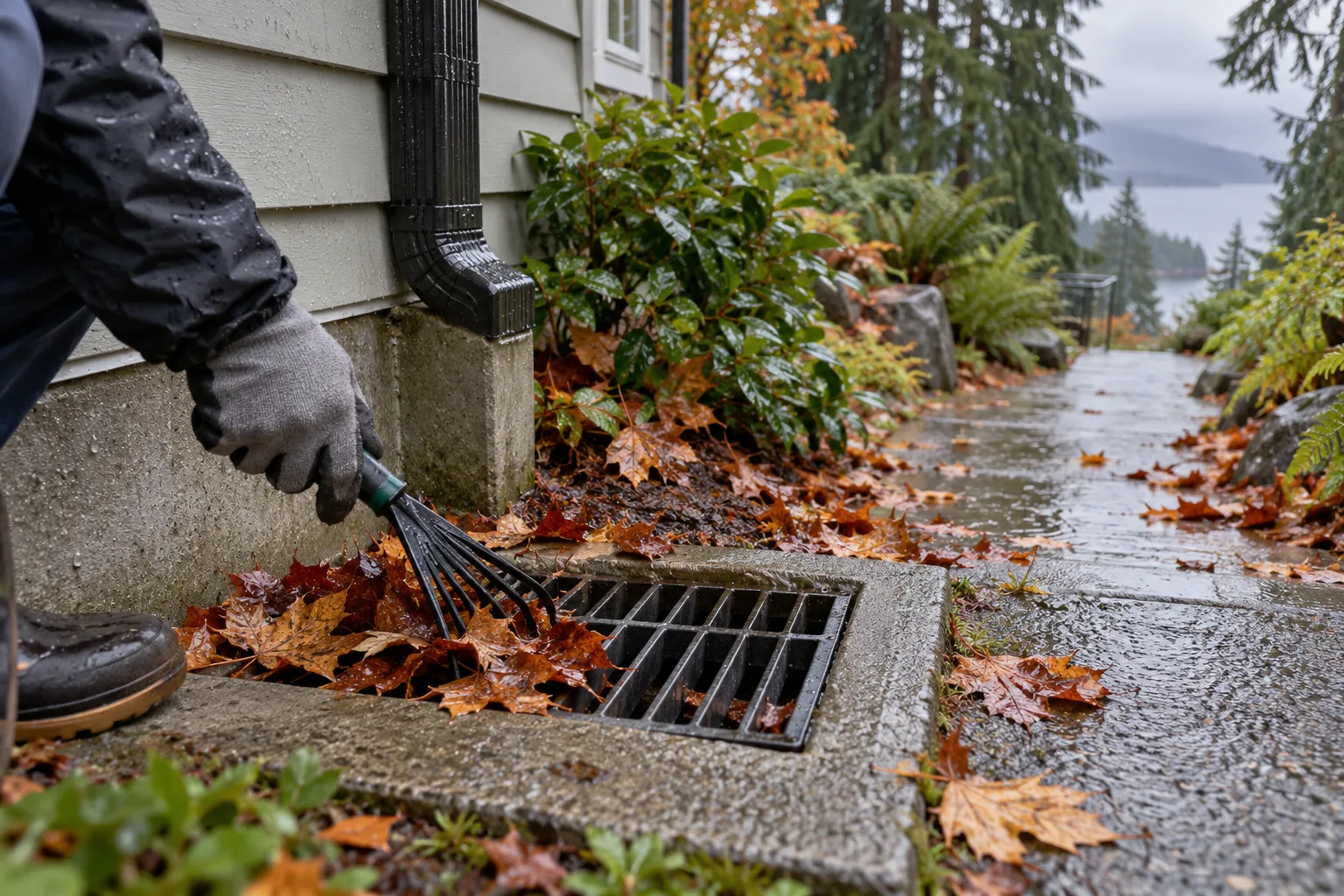
- Remove loose surface leaves from accessible private grates when it is safe. Leave heavy covers in place and never enter a catch basin, manhole or drain.
- Mark the location of accessible drainage features on a simple sketch before snow hides them. Keep the sketch with your maintenance records.
- Record previous repairs, cleaning dates and camera footage. Ask the previous contractor for the report if you only received an invoice.
The aim is to create a short, useful history rather than a pile of identical photographs. Label each image with its location and date. A recurring wet patch after ordinary rainfall is more informative than a single picture taken during an exceptional storm.
When to discuss a CCTV inspection
Recurring ponding, repeated cleaning without lasting improvement, or an unknown buried drainage layout are reasons to discuss an inspection. Ask what length of pipe can actually be inspected, how the technician will identify locations, and whether you will receive the recording and a written explanation. Camera access and visibility vary; ask the contractor to identify any areas the inspection could not assess.
Do not buy a replacement system based only on an unexplained image. Ask for the observed defect, its location, the proposed remedy and the limits of the evidence. Cleaning, a localized repair and replacement are different scopes. The appropriate choice depends on what the inspection and site assessment show.
Our drain-tile and sewer inspection service guide explains the service area. The drain-tile systems page provides context for discussing larger repairs.
Make the maintenance quote useful
Request a written scope that distinguishes surface debris removal from underground pipe cleaning. Ask whether locating, disposal, access preparation, reinstatement and a follow-up inspection are included where relevant. Avoid comparing quotations solely by the total when they describe different work.
Set the next check according to the findings and your contractor's advice. Keep the sump-pump winter checklist alongside this plan if drainage feeds a pump, and use the spring 2027 snowmelt guide when the season changes.