Prepare before the pump becomes urgent
If your home depends on a sump pump, put a system check on your autumn 2026 list and keep the record through winter 2026–2027. Rain, a midwinter thaw and an electrical outage can each change what the system needs to handle. This guide helps you organize the inspection and the questions to ask; the pump manufacturer's instructions remain the starting point for testing your equipment.
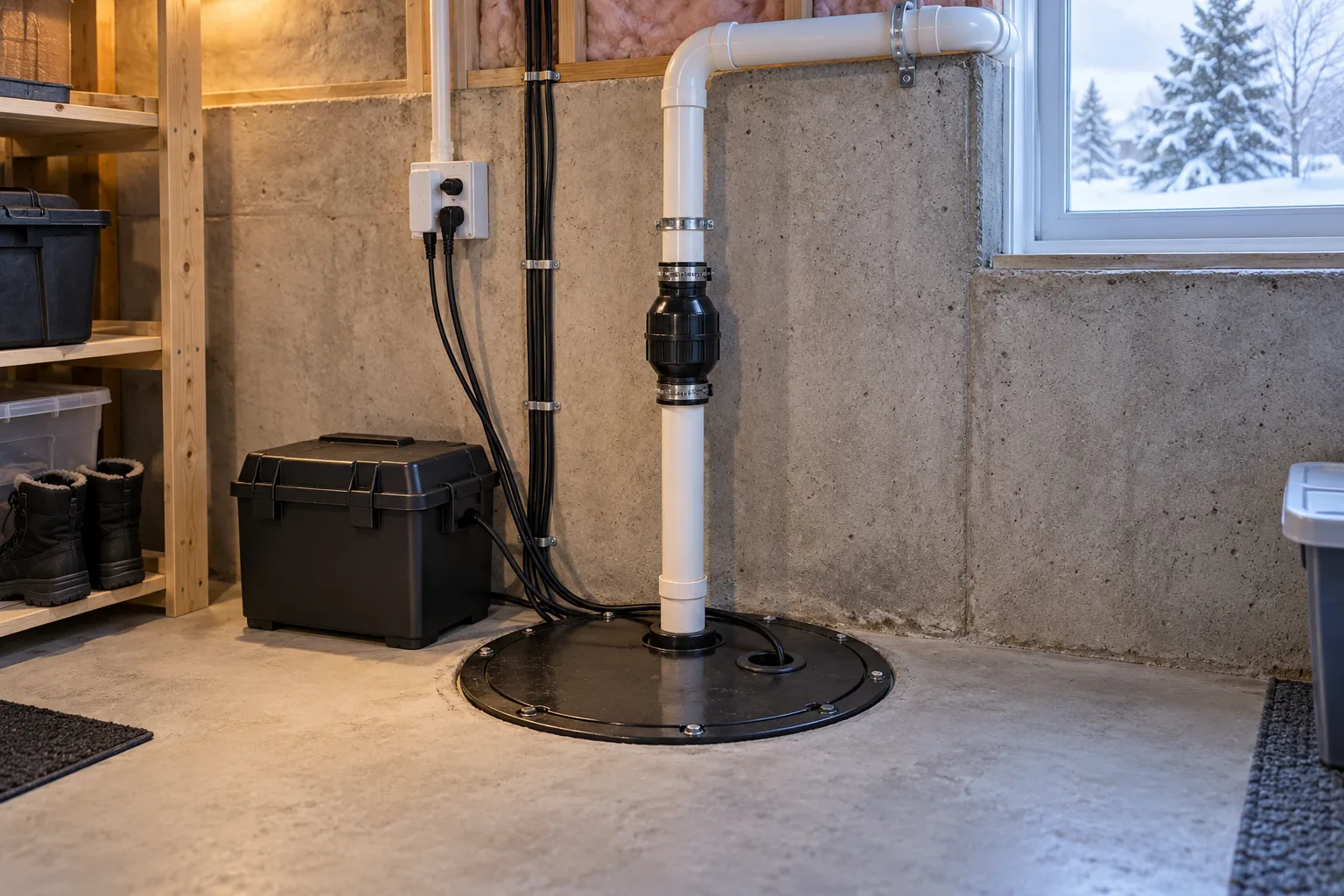
Begin with an inventory. Photograph the pump label, controller and backup equipment from a dry, accessible position. Write down the model, installation date if known, service contact and location of the discharge outlet. You should not have to search for this information while an alarm is sounding.
Check the whole system, not just the motor
The Government of Canada's sump-pump guidance recommends maintenance, an alternate power source and a backup pump. It describes an annual full test, checks during rain and melt events, and an unobstructed discharge that carries water away from the foundation. It recommends professional advice for installation and local permit requirements.
A pump turning on is only one observation. You also need to know whether water leaves the system and whether the backup arrangement is ready. Use the manufacturer's test procedure, or arrange a service visit if access, wiring or the test sequence is unclear. Do not improvise a test by reaching into an energized pit or dismantling electrical components.
Your service-visit checklist
- Primary pump: Ask the technician to demonstrate the normal start and stop cycle and explain which sounds or behaviours should trigger a call.
- Float and controls: Ask how to recognize an obstruction or alarm without moving or altering the equipment yourself.
- Discharge route: Have the route and outlet identified. Ask how the installed system is protected against winter obstruction and what can safely be inspected from outside.
- Backup: Record whether it protects against power loss, primary-pump failure, or both. Two pumps sharing one unprotected power source do not provide outage protection.
- Battery and charger: Obtain the manufacturer's maintenance and replacement guidance. Ask what the status lights mean and how to recognize a fault.
- Alarm: Confirm who will hear or receive it when the house is empty. Test notifications using the equipment's documented procedure.
Keep answers specific to the installed system. A generic claim that a backup lasts a certain number of hours is not enough; ask what pumping frequency, battery condition and other assumptions that estimate depends on.
During a winter storm or thaw
Check the equipment only from a safe, dry location. If an alarm sounds or the water level appears to rise, contact the service provider promptly. Do not enter standing water to unplug equipment, reset a breaker or investigate a pump. Water near electrical equipment calls for professional safety advice, not a hurried DIY repair.
Keep the outdoor discharge location on your property sketch. Ask a professional about a blocked or frozen outlet rather than disconnecting pipes and sending water somewhere unapproved. A solution that moves water onto a walkway or neighbouring property can create another problem.
Distinguish groundwater management from sewer backup
A sump pump and a sewer backwater valve have different roles. Do not assume that servicing one protects against every route water can take into a basement. Tell the contractor whether the previous event involved wall seepage, water at a floor drain, or another source, and ask what evidence supports their diagnosis.
For a broader assessment, start with drainage services and drainage and sewer maintenance. Pair the pump record with our winter drain-tile checklist. Revisit both before the conditions described in our spring 2027 thaw guide.