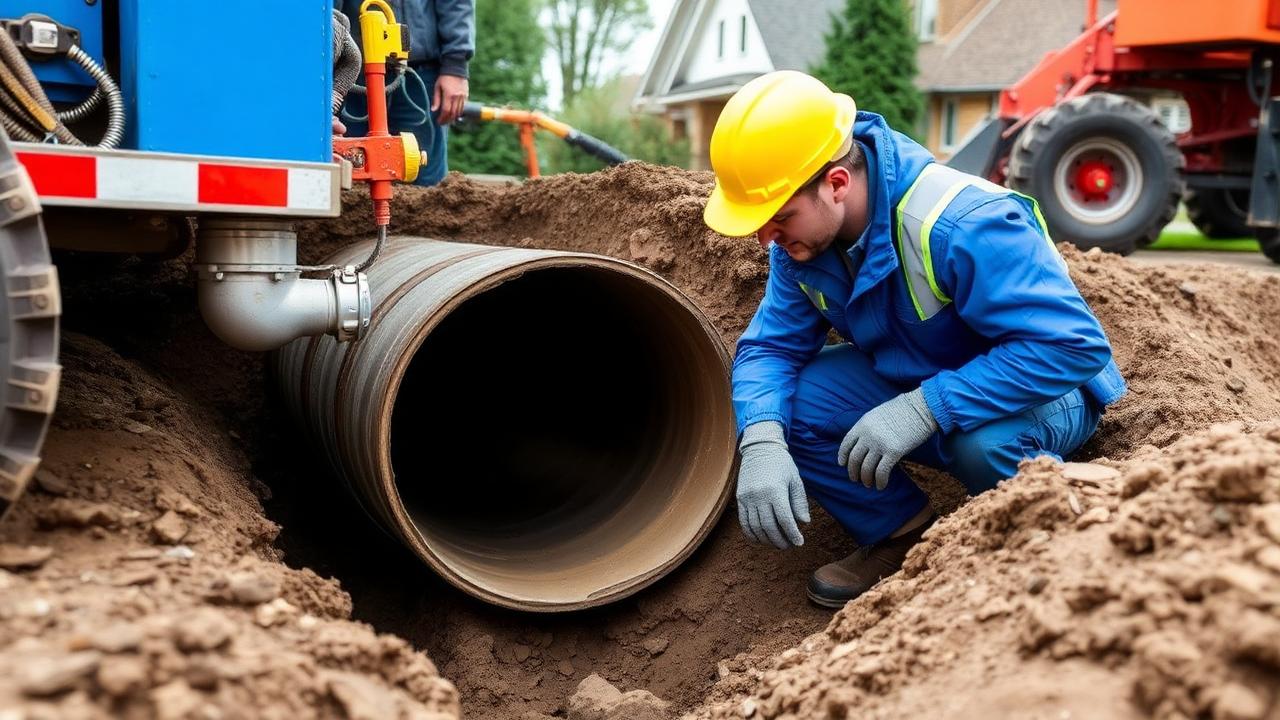
Drainage & Sewer Maintenance Services in Canada
Preventive Drainage & Sewer Maintenance for Canadian Properties
Drainage and sewer systems are the hidden infrastructure that protects every Canadian property from water damage, sewage backup, and foundation failure. Yet most property owners don't think about their drainage until something goes wrong — a flooded basement, a backed-up toilet, or water pooling against the foundation after every rain. By that point, emergency repairs cost three to ten times what scheduled maintenance would have prevented.
Professional drainage and sewer maintenance is the single most cost-effective investment you can make in your property's long-term health. A comprehensive maintenance program addresses every component of your water management system: perimeter drains, sanitary sewer lines, storm drainage, catch basins, sump pumps, and surface grading. Regular service identifies developing problems while they're still minor and inexpensive to address.
PlumbingDrainage.ca connects property owners with qualified drainage maintenance professionals across Canada. Our network contractors carry proper municipal business licences, comprehensive liability insurance, and demonstrate proven expertise in modern drainage maintenance techniques. Whether you need a one-time cleaning or an ongoing maintenance program, we help you find the right contractor for your property.
Why Maintenance Matters More in Canada
Canada's climate creates unique drainage challenges that make maintenance especially critical. Freeze-thaw cycles cause soil movement that shifts pipes and opens joints. Heavy spring snowmelt overwhelms drainage systems designed for average rainfall. Fall leaves and debris clog catch basins and downspout connections right when you need them most. And in coastal regions like British Columbia's Lower Mainland, annual rainfall exceeding 1,200 mm means your drainage system works harder than almost anywhere else in the country.
Without regular maintenance, these seasonal pressures gradually degrade your drainage infrastructure. Roots grow into pipe joints during summer when moisture levels drop. Sediment accumulates in perimeter drains during spring runoff. Grease builds up in sanitary lines from daily kitchen use. Each small problem compounds until the system fails — usually during the worst possible weather, when emergency contractors are busiest and most expensive.
Components of a Complete Maintenance Program
A thorough drainage maintenance program covers every element of your property's water management system. Understanding these components helps you communicate effectively with contractors and ensure nothing gets overlooked.
Sanitary Sewer Line Maintenance
Your sanitary sewer carries wastewater from toilets, sinks, showers, laundry, and appliances to the municipal treatment system. It's a single point of failure — when the main sewer line blocks, nothing drains. Regular maintenance includes CCTV inspection to assess condition, hydro jetting to remove buildup, and root treatment to prevent intrusion at joints and cracks.
For typical residential properties, sanitary sewer maintenance every two to three years prevents most blockages. Properties with mature trees near the sewer line, older pipe materials (clay, cast iron, Orangeburg), or known root intrusion history should schedule annual service. Commercial properties and multi-unit buildings with higher flow volumes benefit from semi-annual maintenance.
The maintenance visit should include a CCTV camera run before and after cleaning. The pre-cleaning video identifies specific problems and guides the cleaning approach. The post-cleaning video confirms effective treatment and establishes a baseline for future comparison. This documentation also supports insurance claims if problems develop between maintenance visits.
Perimeter Drain Maintenance
Perimeter drains (weeping tile) collect groundwater around your foundation footings and redirect it to a sump pump or storm sewer discharge. These systems are buried six to eight feet underground, making visual inspection impossible without camera technology. Perimeter drain maintenance includes CCTV inspection, flushing to remove accumulated sediment, and verification that discharge connections are clear and functional.
Perimeter drain maintenance is particularly critical for homes built before 1990, when clay tile and early corrugated plastic pipe were standard. These older materials are prone to collapse, root intrusion, and sediment blockage. Even modern PVC perimeter drains benefit from periodic flushing to remove fine sediment that accumulates over years of service.
Warning signs that your perimeter drains need attention include musty basement odours, visible water stains on foundation walls, efflorescence (white mineral deposits on concrete), condensation on basement walls, and actual water infiltration during or after heavy rain. Any of these symptoms warrant immediate professional assessment.
Storm Drainage Maintenance
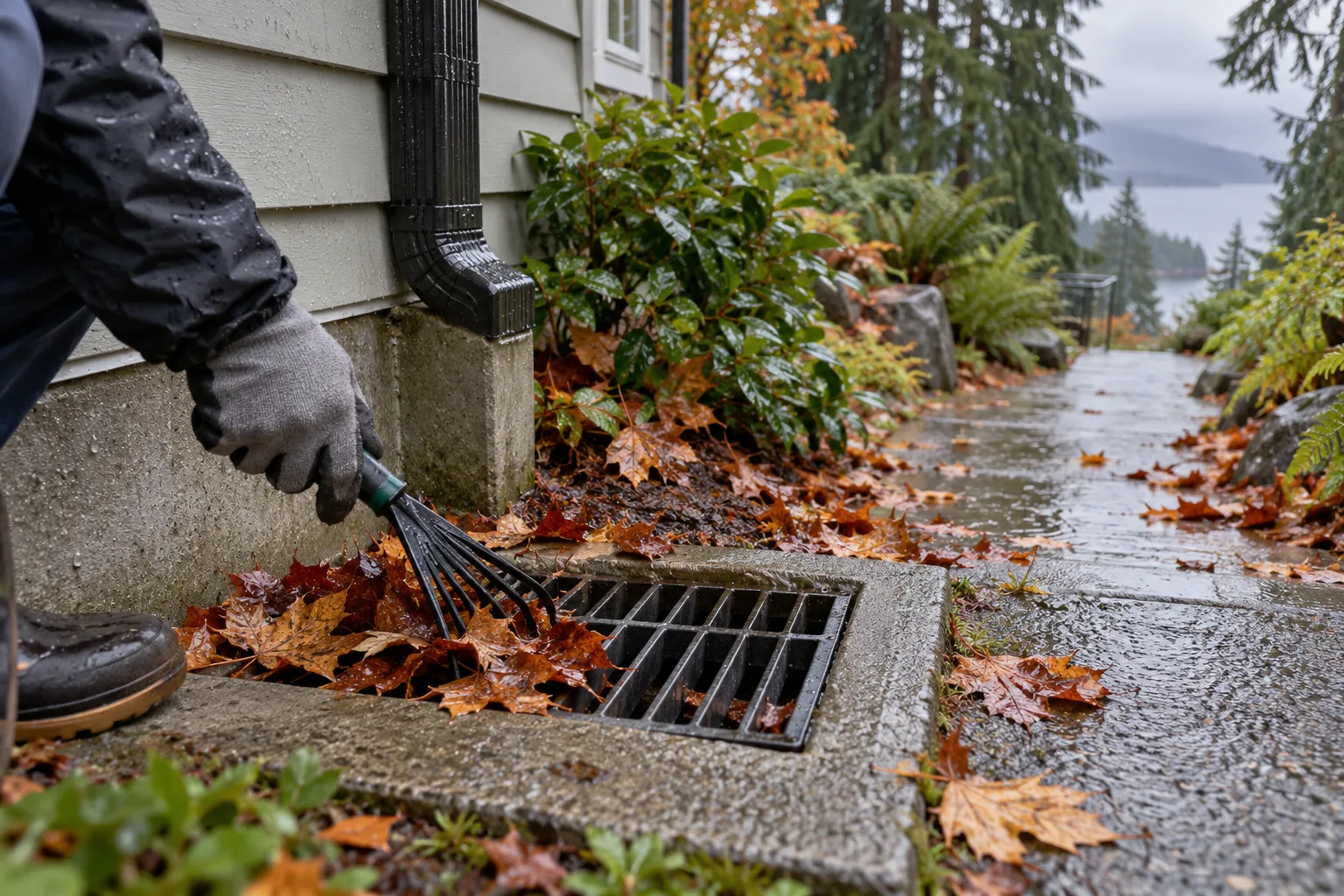
Storm drains manage rainwater from your roof, driveway, patios, and landscaping. Components include downspout connections, yard drains, catch basins, and underground piping to the municipal storm sewer. Maintenance involves clearing debris from grates and catch basins, flushing connecting pipes, verifying proper flow, and checking downspout connections for blockage or separation.
Fall is the critical season for storm drainage maintenance. Leaves, needles, and organic debris accumulate in catch basins and grates, restricting flow exactly when heavy autumn rains begin. A fall maintenance visit that clears debris and verifies flow prevents most winter drainage problems. Spring follow-up addresses any damage from freeze-thaw cycles and ensures the system handles snowmelt and spring rain effectively.
Catch Basin Service
Catch basins are the collection points in your storm drainage system — the grated boxes in driveways, yards, and parking areas. They include a sediment trap that collects debris before it enters the drainage piping. When sediment traps fill up, debris passes through to the piping, causing blockages downstream.
Catch basin maintenance includes removing accumulated sediment and debris, inspecting the basin structure for cracks or settlement, verifying that connecting pipes are clear, and checking grate condition. Most residential catch basins need service annually. Commercial properties with larger paved areas and higher debris loads may need quarterly service.
Sump Pump Maintenance
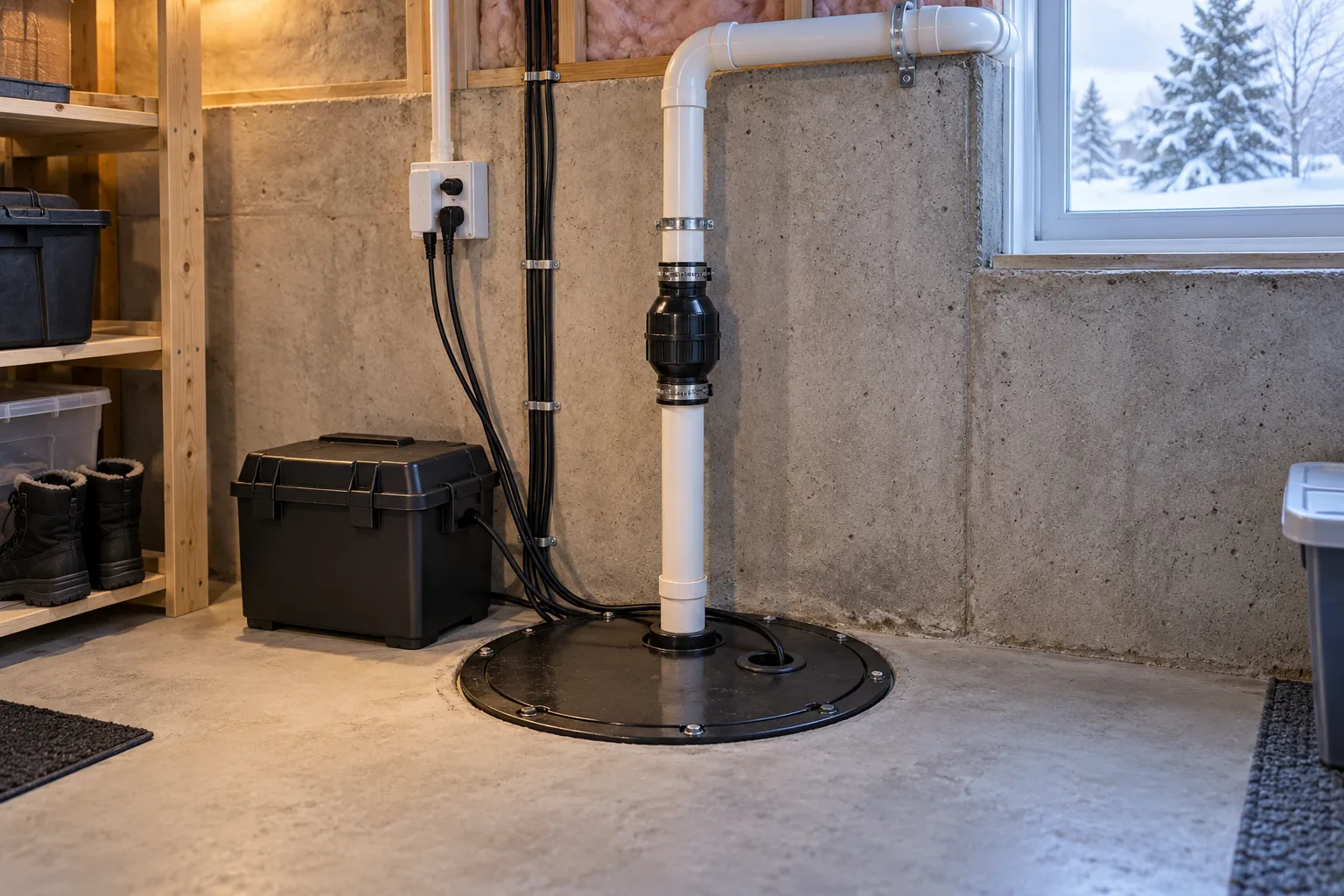
If your perimeter drains discharge to a sump pit rather than directly to the storm sewer, your sump pump is the critical link that keeps your basement dry. Sump pump maintenance includes testing pump operation, cleaning the pit and intake screen, verifying the check valve function, testing the backup system (battery or water-powered), and checking the discharge line for blockage or freeze damage.
Sump pump failure during heavy rain is one of the most common causes of basement flooding. Annual maintenance, ideally scheduled before the wet season, dramatically reduces failure risk. Battery backup systems need battery replacement every two to three years, and the backup should be tested separately from the primary pump.
Seasonal Maintenance Calendar for Canadian Properties
Canada's dramatic seasonal changes mean drainage maintenance timing matters as much as the maintenance itself. Following a seasonal calendar ensures your system is prepared for each phase of the weather cycle.
Spring (March–May)
Spring is assessment and recovery season. Snowmelt and spring rain test your drainage system after winter's freeze-thaw stress. Schedule a CCTV inspection of sanitary and perimeter drains to check for frost damage. Inspect catch basins for winter debris accumulation. Test sump pump operation after winter dormancy. Check exterior grading for settlement that may have occurred during ground thaw. Verify downspout extensions are connected and directing water away from the foundation.
Summer (June–August)
Summer is the ideal season for major drainage work because dry conditions allow excavation and repair without fighting water infiltration. Schedule any needed repairs identified during spring inspection. Trim tree roots growing near sewer lines. Install root barriers if root intrusion is recurring. Repair or replace damaged catch basin grates before fall rains. Address any surface drainage issues — regrading, French drain installation, or swale construction — while conditions are dry.
Fall (September–November)
Fall maintenance is your last chance to prepare before winter. Clear all catch basins and grates of leaves and organic debris. Flush storm drainage connections to ensure clear flow. Verify sump pump and backup system operation. Clean gutters and downspouts. Check downspout connections to underground drainage. Consider scheduling hydro jetting of sanitary sewer if it's been more than two years since the last cleaning.
Winter (December–February)
Winter is monitoring season. Watch for signs of drainage problems: ice buildup near the foundation (indicating drainage discharge issues), unusual basement moisture, slow-draining fixtures, or sewage odours. Keep catch basin grates clear of snow and ice to allow surface drainage during thaw periods. Don't wait until spring to address any new symptoms — winter drainage emergencies escalate quickly.
Year-Round Best Practices
Several maintenance habits protect your drainage year-round. Never pour grease, fat, or cooking oil down drains — collect it in containers for disposal. Use drain screens to catch hair and debris. Don't plant trees or large shrubs within ten feet of sewer lines. Keep downspout extensions in place and directed away from the foundation. Monitor your water bill for unexplained increases that might indicate a leak in underground piping.
Maintenance Costs vs. Emergency Repair Costs in Canada
Understanding the economics of drainage maintenance helps justify the investment. In every category, scheduled maintenance costs a fraction of emergency repair.
Sanitary Sewer Maintenance vs. Repair
A routine CCTV inspection and hydro jetting typically costs $400–$800 for a residential property. Repeat this every two to three years, and you'll spend roughly $200–$400 annually on sewer maintenance. Compare this to emergency sewer line repair: excavation and spot repair runs $3,000–$8,000, while full sewer line replacement can cost $8,000–$25,000 depending on depth, length, and access conditions.
Sewer backup cleanup adds another layer of cost. Professional remediation of a sewage-contaminated basement typically costs $5,000–$15,000, and many insurance policies exclude or limit sewer backup coverage. The total cost of a single sewer emergency can equal decades of maintenance spending.
Perimeter Drain Maintenance vs. Replacement
Perimeter drain flushing and CCTV inspection costs $300–$600 per visit. Annual or biennial maintenance extends system life significantly. Full perimeter drain replacement — the alternative when maintenance is neglected until failure — costs $8,000–$20,000 for a typical single-family home, with additional costs for landscaping restoration, foundation waterproofing, and potential interior remediation.
Catch Basin and Storm Drain Maintenance vs. Repair
Annual catch basin cleaning costs $100–$300 per basin. Neglected catch basins eventually cause downstream pipe blockages and surface flooding, with repair costs ranging from $1,500–$5,000 per incident. In severe cases, failed storm drainage causes foundation erosion and structural damage costing tens of thousands to repair.
Sump Pump Maintenance vs. Failure
Annual sump pump service costs $150–$250, including testing, cleaning, and battery check. Sump pump failure during heavy rain can flood an entire basement within hours. Remediation costs for a flooded basement typically start at $10,000 and can exceed $50,000 for finished basements with mechanical systems, stored valuables, and mould development.
The Bottom Line
For a typical Canadian residential property, a comprehensive annual drainage maintenance program costs $800–$1,500. This protects against emergency scenarios that routinely cost $10,000–$50,000 or more. The return on investment is not hypothetical — it's demonstrated by the hundreds of thousands of Canadian homeowners who face drainage emergencies every year, the vast majority of which preventive maintenance would have avoided.
Commercial and Strata Drainage Maintenance Programs
Commercial properties and strata buildings face drainage challenges at a different scale than single-family homes. Higher flow volumes, shared infrastructure, regulatory requirements, and the financial impact of drainage failures all demand structured, professional maintenance programs.
Commercial Property Maintenance
Commercial properties with large paved areas — parking lots, loading docks, and paved yards — generate significant stormwater runoff that overwhelms undersized or neglected drainage infrastructure. Catch basins in commercial parking lots accumulate sediment, oil, and debris much faster than residential installations. Municipal regulations in many Canadian cities require regular catch basin maintenance and stormwater management compliance.
Commercial kitchens present unique sanitary sewer challenges. Grease accumulation in drain lines is the leading cause of commercial sewer blockages. Many municipalities require grease interceptor installation and regular maintenance for food service establishments. Failure to maintain grease interceptors can result in municipal fines, sewer surcharges, and liability for downstream damage.
Strata Building Maintenance
Strata buildings share drainage infrastructure among multiple units, meaning one unit's drainage problem can affect many others. A blocked sanitary main can cause backup in multiple units simultaneously. Failed perimeter drains affect all ground-floor and below-grade units. Strata councils have a fiduciary duty to maintain common drainage infrastructure, and neglecting this responsibility exposes the strata corporation to significant liability.
Best practice for strata maintenance includes annual CCTV inspection of common sanitary and storm drainage lines, semi-annual catch basin cleaning for parking structures and common areas, annual sump pump testing and maintenance, and regular perimeter drain assessment. These services should be included in the strata's annual maintenance budget and performed by qualified contractors with strata experience.
Documentation and Compliance
Both commercial and strata maintenance programs should include thorough documentation: inspection reports, cleaning records, repair histories, and video archives. This documentation supports regulatory compliance, insurance claims, warranty enforcement, and long-term capital planning. Digital record-keeping allows easy comparison between annual inspections to track system condition trends.
Many municipalities are implementing stormwater utility fees based on impervious surface area. Properties that demonstrate effective stormwater management through documented maintenance programs may qualify for fee reductions. Commercial and strata properties should explore these incentive programs with their municipality.
Choosing a Drainage Maintenance Contractor
Not all drainage contractors are equally qualified to perform comprehensive maintenance. Choosing the right contractor ensures effective service and protects your investment.
Essential Qualifications
Verify the contractor's municipal business licence for your area. Confirm comprehensive general liability insurance (minimum $2 million for residential, $5 million for commercial). Ask for Workers' Compensation Board registration. Check for relevant trade certifications and manufacturer training on equipment used.
Equipment Standards
Modern drainage maintenance requires professional-grade equipment. CCTV inspection cameras should be HD resolution with distance counters, pan-and-tilt capability, and self-levelling heads. Hydro jetting equipment should provide adequate pressure (3,000-4,000 PSI for residential, higher for commercial) with variable nozzle configurations. The contractor should have proper safety equipment for confined space work when accessing manholes or deep cleanouts.
Service Agreements
For ongoing maintenance, a formal service agreement provides structure, accountability, and often cost savings. Good service agreements specify the scope of work for each visit, the maintenance schedule and seasonal timing, pricing (fixed or per-visit with maximum annual cost), reporting requirements and documentation standards, emergency response provisions, and cancellation terms.
Red Flags to Avoid
Be cautious of contractors who quote without inspecting the system first, recommend expensive repairs without CCTV documentation, don't carry proper insurance or licensing, can't explain their maintenance approach clearly, pressure you into immediate decisions on major repairs, or lack references from similar properties in your area.
PlumbingDrainage.ca Contractor Standards
Every contractor in the PlumbingDrainage.ca network meets baseline qualification standards including proper licensing, insurance verification, equipment standards, and demonstrated expertise. Our directory makes it easy to find qualified maintenance contractors in your area and compare their specializations, service areas, and capabilities.
Getting Started
If your property doesn't have a maintenance program in place, start with a comprehensive baseline assessment. A CCTV inspection of your sanitary sewer, perimeter drains, and storm drainage provides a complete picture of current conditions and identifies immediate concerns and future maintenance priorities. This baseline inspection is the foundation for an effective ongoing maintenance program tailored to your property's specific needs and conditions.
Frequently Asked Questions
How often should I have my drains maintained?
For most residential properties, annual maintenance is ideal. Homes with mature trees near sewer lines, older pipe materials, or previous drainage problems benefit from semi-annual service. Commercial properties and strata buildings typically need quarterly to semi-annual maintenance depending on usage and system size.
What does drainage maintenance include?
A comprehensive maintenance visit includes CCTV camera inspection of sanitary and perimeter drains, hydro jetting or mechanical cleaning as needed, catch basin cleaning and inspection, sump pump testing, and a written condition report with recommendations. Some contractors offer tiered packages from basic inspection to full system service.
Can maintenance prevent basement flooding?
Regular maintenance dramatically reduces flooding risk by keeping drainage systems clear, identifying developing problems early, and ensuring sump pumps function properly. While no system can guarantee zero risk during extreme weather events, maintained systems are far more resilient than neglected ones.
Is drainage maintenance tax deductible?
For rental properties and commercial buildings, drainage maintenance is typically a deductible operating expense. For owner-occupied residential properties, maintenance isn't directly deductible, but it protects your property value and prevents far more expensive emergency repairs.
What time of year is best for drainage maintenance?
Fall (September-October) is the most critical time for maintenance, preparing your system for winter rains and freeze-thaw cycles. Spring (March-April) is the second priority, assessing any winter damage and preparing for summer. Ideally, maintain your system both seasons.
How much does annual drainage maintenance cost?
A comprehensive annual maintenance program for a typical residential property costs $800-$1,500, including CCTV inspection, cleaning, sump pump service, and catch basin maintenance. This is a fraction of the $10,000-$50,000+ cost of emergency drainage repairs and flood remediation.
Seasonal homeowner guides
Get ready for winter 2026–2027
Practical checks for cold weather, heavy rain and the spring thaw. Start with the guide that fits your home.
Find a Drainage Professional
Connect with qualified contractors in your area through PlumbingDrainage.ca.
View All Services