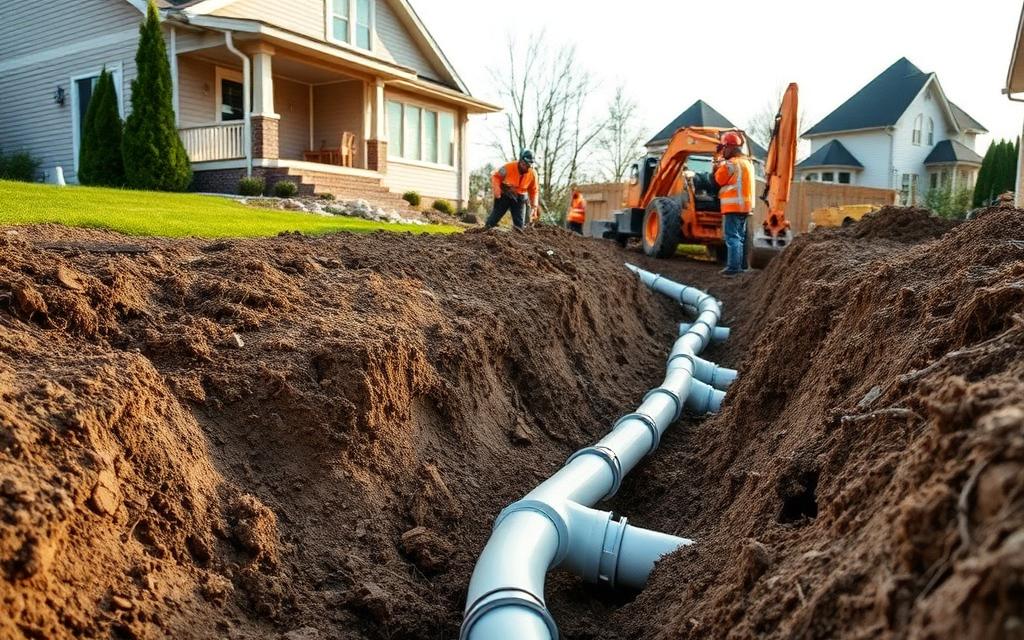
Planning New Drainage Infrastructure
Whether you're building a new home, adding a secondary suite, or developing a commercial property, proper drainage and sewer installation is foundational work that affects everything built on top of it. Getting it right from the start prevents decades of problems.
Types of Drainage Systems
- Sanitary sewer — carries wastewater from toilets, sinks, and appliances to municipal treatment
- Storm drainage — manages rainwater from roofs, driveways, and landscaping
- Combined systems — older infrastructure that handles both (being separated in most Canadian cities)
- Perimeter drains — foundation waterproofing system (separate from sanitary and storm)
Municipal Requirements
Permits and Approvals
Every Canadian municipality requires permits for new drainage connections. The application process typically includes:
- Site servicing plan prepared by a civil engineer
- Hydraulic calculations for storm drainage
- Connection permits from the municipal engineering department
- Development cost charges (DCCs) for new connections
- Inspection at key construction stages
Building Code Requirements
The National Plumbing Code of Canada and provincial building codes govern pipe sizing, slope, materials, cleanout placement, backwater valve requirements, and venting. Key requirements include:
- Minimum 2% slope for building sewers (1/4 inch per foot)
- Backwater valve on all below-grade fixtures
- Cleanout access within 1.5 metres of the building exit
- Proper separation between sanitary and storm systems
- Adequate pipe sizing based on fixture unit calculations
Materials and Methods
Pipe Materials
- PVC (Schedule 40) — standard for new residential and commercial drainage
- ABS — common in residential drain-waste-vent systems
- HDPE — high-density polyethylene for storm drainage and challenging soil conditions
- Concrete — large-diameter storm and sanitary mains
- Ductile iron — heavy-duty applications under roads and high-load areas
Installation Methods
- Open trench — traditional excavation for new construction
- Trenchless (directional drilling) — for crossing roads, driveways, or sensitive areas
- Pipe bursting — replacing existing pipes without full excavation
- Microtunnelling — for large-diameter installations under infrastructure
Quality Control
Inspection and Testing
- Air test — pressurized air test to verify pipe integrity
- Water test — filled-pipe test for gravity systems
- CCTV inspection — post-installation camera survey to verify condition
- Mandrel test — flexible gauge pulled through pipe to verify deflection limits
- Compaction testing — soil density tests on backfill material
Common Installation Defects
- Insufficient slope causing standing water
- Improper bedding material allowing pipe deflection
- Inadequate compaction leading to settlement
- Missing or poorly placed cleanouts
- Cross-connections between sanitary and storm systems
Cost Estimates
New drainage installation costs vary widely based on scope:
- Residential sewer connection — $5,000–$15,000
- Storm drainage system (residential) — $3,000–$10,000
- Perimeter drain (new construction) — $3,000–$6,000
- Commercial site servicing — $20,000–$100,000+
- Municipal connection fees — $2,000–$10,000 (varies by municipality)
Working With Your Contractor
A qualified drainage contractor should:
- Hold appropriate municipal business licences
- Carry comprehensive liability insurance
- Provide detailed written quotes with material specifications
- Pull all required permits
- Schedule municipal inspections at required stages
- Provide warranty on workmanship
- Offer post-installation CCTV documentation