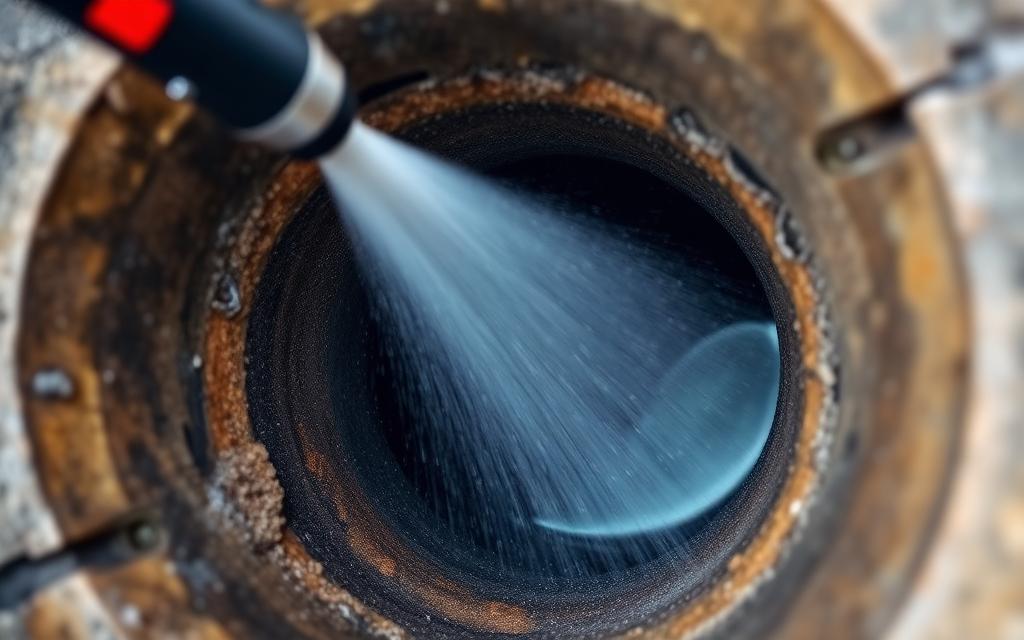
What Is Pressure Jetting?
Pressure jetting (also called hydro jetting) uses a specialized nozzle that propels water at pressures up to 4,000 PSI through your drainage pipes. This high-pressure stream scours the interior walls of the pipe, removing grease, scale, roots, sediment, and debris that restrict water flow.
How It Differs From Snaking
Traditional drain snaking (augering) punches a hole through a blockage but doesn't clean the pipe walls. The clog material remains adhered to the pipe and rebuilds quickly. Hydro jetting removes the buildup entirely, restoring the pipe to near-original capacity.
Comparison:
- Snaking — temporary relief, $150–$300, blockage returns in weeks to months
- Hydro jetting — thorough cleaning, $350–$800, results last 1–3 years
- Chemical cleaners — ineffective on most blockages, damages pipes, harmful to environment
When Hydro Jetting Is Needed
- Recurring drain backups despite snaking
- Slow-draining fixtures throughout the home
- Grease-clogged restaurant or commercial kitchen lines
- Root-infiltrated sewer lines (as a maintenance measure)
- Pre-lining preparation — pipes must be clean before CIPP lining
- Annual maintenance for strata and commercial buildings
The Process
- CCTV inspection — camera survey to identify the problem and assess pipe condition
- Access point selection — cleanout, catch basin, or roof vent stack
- Nozzle selection — different nozzles for grease, roots, sand, or general cleaning
- Jetting — high-pressure water is fed through the system systematically
- Post-cleaning inspection — camera re-inspection confirms results
Safety and Pipe Considerations
Hydro jetting is safe for most pipe materials including PVC, ABS, cast iron, clay, and concrete. However, pipes that are severely deteriorated, collapsed, or have existing holes may not be suitable — the high-pressure water could cause further damage. This is why a pre-jetting CCTV inspection is essential.
Environmental Benefits
Unlike chemical drain cleaners, hydro jetting uses only water. The removed material flows to the municipal treatment system. This makes it the most environmentally responsible drain cleaning method available.
Cost Factors
- Residential mainline — $350–$600
- Commercial kitchen lines — $500–$1,200
- Strata building (multiple risers) — $1,500–$5,000
- Storm drain systems — varies by diameter and length
Maintenance Scheduling
For most residential homes, hydro jetting every 2–3 years prevents buildup from reaching critical levels. Restaurants and commercial kitchens may need quarterly or semi-annual service. Strata buildings benefit from annual jetting of common lines.
Finding a Qualified Contractor
Look for drainage contractors who:
- Own their own jetting equipment (not subcontracting)
- Carry proper licensing and insurance
- Include CCTV inspection with jetting service
- Use variable-pressure equipment suited to residential pipe sizes
- Provide before-and-after video documentation