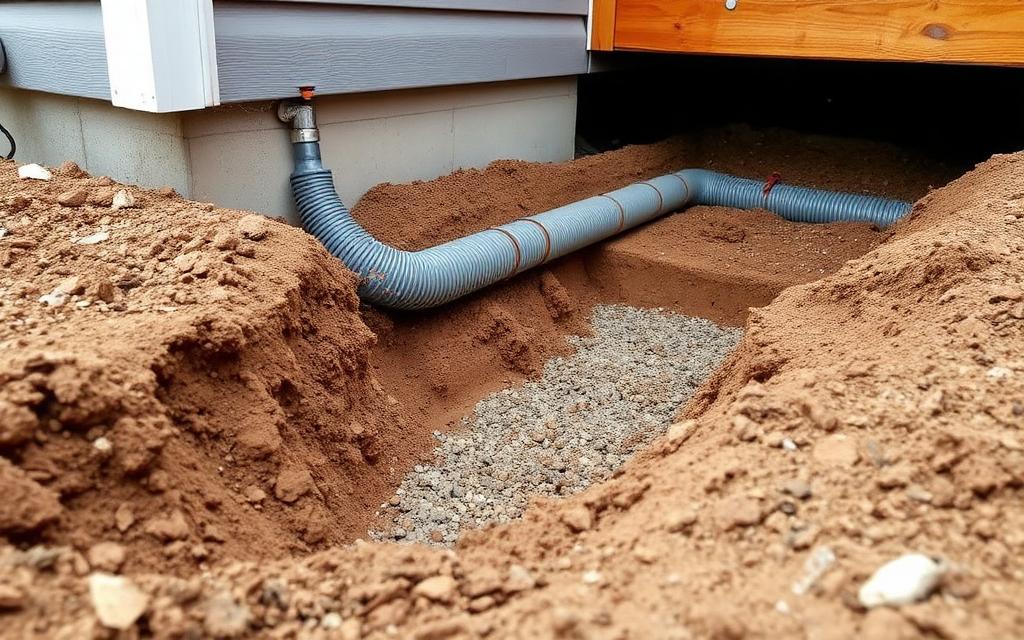
What Are Perimeter Drains?
Perimeter drains — also called weeping tile, foundation drains, or French drains — are a critical component of your home's waterproofing system. Installed around the exterior footings of your foundation, they collect groundwater and redirect it away from your home before it can seep into your basement or crawlspace.
How Perimeter Drains Work
The system consists of perforated pipe (typically 4-inch corrugated or rigid PVC) laid in a gravel bed at the base of your foundation. Water from the surrounding soil enters the pipe through perforations and flows by gravity to a discharge point — either a storm sewer connection, a sump pit with pump, or a daylight outlet on a sloped lot.
Key components:
- Perforated drainage pipe (corrugated or rigid PVC)
- Filter fabric (geotextile) to prevent soil infiltration
- Washed drainage gravel (3/4-inch clear crush)
- Waterproof membrane on foundation wall
- Catch basins or cleanouts for maintenance access
Signs Your Perimeter Drains Need Replacement
Most perimeter drains in the Lower Mainland were installed with the original home construction. Older systems using clay tile, tar paper pipe, or early corrugated plastic have a lifespan of 25–40 years. Here are warning signs:
- Damp or musty smell in the basement
- Visible water stains on foundation walls
- Efflorescence (white mineral deposits) on concrete
- Standing water in window wells
- Soggy soil near the foundation year-round
- Basement flooding during heavy rain
The Installation Process
Step 1: Excavation
The contractor excavates a trench around the perimeter of your foundation down to the footings — typically 6 to 8 feet deep. This requires careful work around landscaping, patios, walkways, and utilities.
Step 2: Foundation Inspection and Repair
With the foundation exposed, cracks and deterioration can be identified and repaired. This is the ideal time to apply waterproof membrane coating.
Step 3: Pipe Installation
New perforated pipe is laid on a bed of washed gravel, sloped to ensure proper drainage flow. Filter fabric wraps the pipe and gravel to prevent silt contamination.
Step 4: Backfill and Restoration
The trench is backfilled in layers with compaction. Landscaping, walkways, and surfaces are restored.
Step 5: Connection and Testing
The system is connected to the municipal storm sewer (where permitted) or a sump pump system. Water testing confirms proper flow.
Cost Considerations in BC
Perimeter drain replacement in the Lower Mainland typically ranges from $8,000 to $15,000 for a standard single-family home. Factors affecting cost include:
- Home size and footprint — more linear footage = higher cost
- Depth to footings — deeper foundations require more excavation
- Access challenges — tight lot lines, decks, and landscaping
- Municipal connection fees — some cities charge for storm sewer connections
- Foundation repairs — cracks or deterioration found during excavation
Municipal Permits
Most Lower Mainland municipalities require a building permit for perimeter drain work. Your contractor should handle the permit application, which typically includes a site plan and connection details.
Choosing the Right Contractor
Perimeter drain installation is specialized work requiring:
- Proper excavation equipment (mini excavator, shoring if needed)
- Knowledge of local building codes and drainage bylaws
- Experience with various soil conditions (clay, sand, rock)
- Ability to coordinate with municipal utilities
- Warranty on workmanship and materials
Red Flags to Watch For
- No building permit pulled
- Using landscape fabric instead of proper geotextile
- Skipping waterproof membrane on foundation
- No cleanouts installed for future maintenance
- Dumping excavated soil back without proper backfill compaction
Maintenance Tips
- Flush cleanouts annually with a garden hose
- Keep gutters clean — downspouts should discharge away from the foundation
- Avoid planting trees with aggressive root systems near the drain line
- Grade soil away from the foundation (minimum 2% slope)
- Schedule a CCTV inspection every 5 years