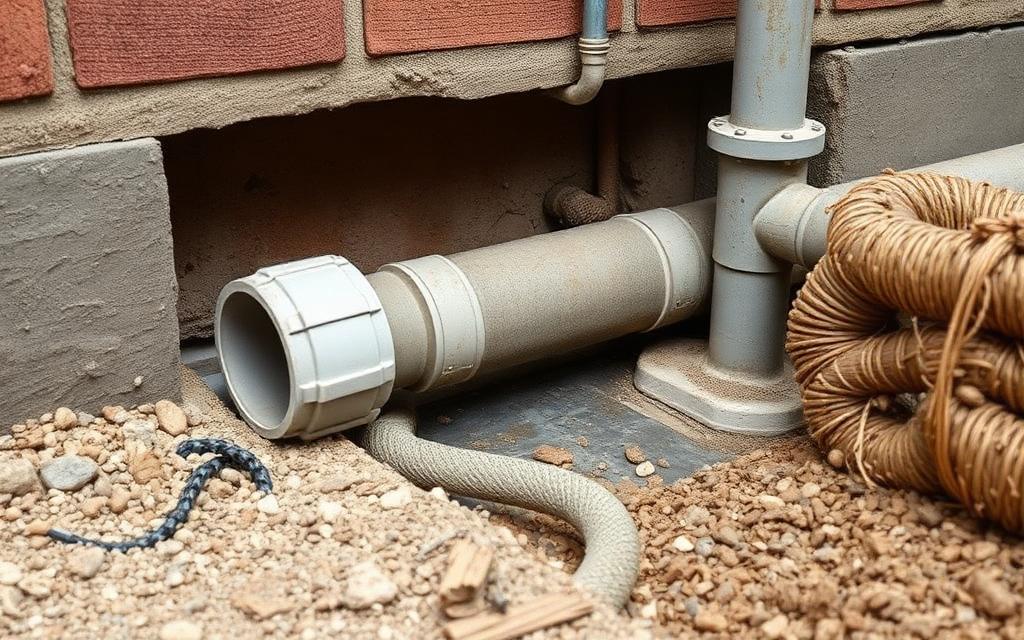
The Confusion Between Drain Tile and French Drains
If you've ever searched for drainage solutions, you've likely encountered the terms "drain tile," "weeping tile," "French drain," and "perimeter drain" used seemingly interchangeably. While they share the same basic principle — collecting and redirecting water — there are important distinctions.
What Is Drain Tile?
The term "drain tile" dates back to the early 1900s when actual clay tiles were laid end-to-end around foundations to collect groundwater. Water entered through the gaps between tiles and flowed to a discharge point. Modern drain tile uses perforated PVC or corrugated plastic pipe, but the name persists.
Drain tile specifically refers to:
- Perimeter foundation drainage systems
- Installed at or below footing level during construction
- Connected to municipal storm sewer or sump pump
- Primary purpose: foundation waterproofing
What Is a French Drain?
A French drain is a broader term for any gravel-filled trench containing perforated pipe that redirects surface or subsurface water. Named after Henry French, who popularized the concept in 1859, French drains can be installed almost anywhere on a property.
French drains are used for:
- Yard drainage — redirecting surface water away from soggy areas
- Retaining wall drainage — relieving hydrostatic pressure
- Driveway and patio drainage — managing runoff
- Garden and landscape drainage
Key Differences
Depth: Drain tile sits at foundation depth (6–8 feet). French drains are typically shallow (12–24 inches).
Purpose: Drain tile protects your foundation from groundwater. French drains manage surface water and shallow subsurface drainage.
Construction: Drain tile requires professional installation with excavation equipment. French drains can sometimes be a DIY project for handy homeowners.
Cost: Drain tile replacement runs $8,000–$15,000. A French drain installation ranges from $1,500–$5,000 depending on length.
When You Need Professional Help
Drain Tile (Call a Drainage Contractor)
- Basement is damp, musty, or flooding
- Foundation walls show water stains or efflorescence
- Home was built before 1990 and has never had drain work
- CCTV inspection reveals failed perimeter drainage
French Drain (May Be DIY-Able)
- Persistent puddles in the yard after rain
- Water pooling against a retaining wall
- Soggy areas that won't dry out
- Surface water flowing toward the house
Best Practices for Both Systems
Regardless of which system you need, these principles apply:
- Use washed drainage gravel (not pit-run or recycled concrete)
- Wrap pipe and gravel in geotextile filter fabric
- Maintain minimum 1–2% slope toward discharge point
- Install cleanouts for future maintenance access
- Don't connect to sanitary sewer (storm only or daylight outlet)
- Check local bylaws — some municipalities restrict discharge locations
The Bottom Line
If your basement is wet, you likely need drain tile (perimeter drain) work — and that requires a professional drainage contractor. If your yard has surface water issues, a French drain may solve the problem at a fraction of the cost. In many cases, a comprehensive drainage plan includes both systems working together.