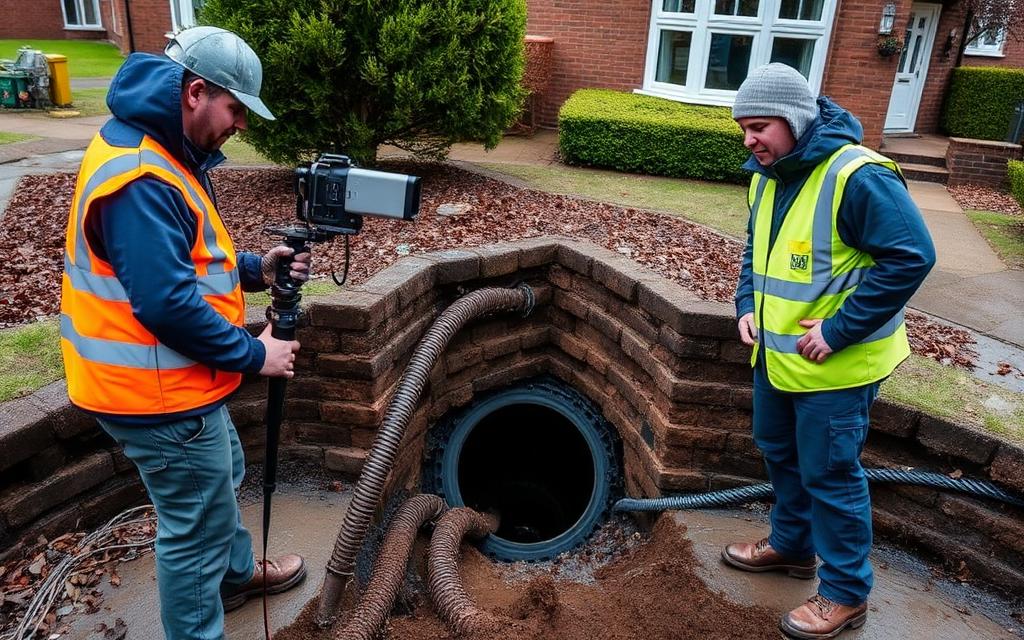
Why CCTV Drain Inspections Matter
Every year, thousands of Canadian homeowners face unexpected basement flooding, sewage backups, and foundation damage — problems that could have been prevented with a simple camera inspection. CCTV (Closed-Circuit Television) drain inspections have revolutionized how drainage professionals diagnose underground pipe issues.
How CCTV Inspections Work
A waterproof, high-definition camera is mounted on a flexible rod or crawler and fed into your drainage system through an access point — typically a cleanout or catch basin. The camera transmits real-time video to a monitor above ground, allowing the technician to see the interior condition of your pipes.
What the camera reveals:
- Root intrusion from trees and shrubs
- Cracks, fractures, and pipe collapse
- Bellied or sagging pipe sections that trap water
- Grease buildup and scale deposits
- Offset joints where pipes have shifted
- Deterioration of clay, concrete, or cast-iron pipes
When to Schedule an Inspection
- Before buying a home — a sewer scope is essential for real estate due diligence
- After recurring clogs — repeated backups suggest a structural issue
- Before renovation — adding bathrooms or extending drainage requires knowing current conditions
- Strata buildings — annual inspections prevent multi-unit failures
- Post-storm assessment — heavy rainfall can shift or damage buried pipes
The Inspection Report
A professional CCTV inspection includes a full video recording, condition assessment, and written report with recommendations. This report is invaluable for insurance claims, real estate transactions, and planning repairs.
Cost vs. Consequence
A CCTV inspection typically costs between $250 and $500 in the Lower Mainland. Compare that to a sewer line replacement ($8,000–$25,000) or basement flood remediation ($10,000–$50,000+). The inspection pays for itself by catching problems early.
Choosing a Qualified Inspector
Look for contractors who use modern HD cameras with distance counters and self-levelling heads. The report should include pipe material identification, exact location of defects (measured from the access point), and severity grading.
Questions to Ask Your Inspector
- What camera resolution do you use?
- Do you provide a full video recording I can keep?
- Can you locate defects with GPS or electronic locating?
- Are you licensed and insured for drainage work in my municipality?
- Do you offer repair services if problems are found?
Common Findings in Canadian Homes
Root Intrusion
The number one issue in older Canadian neighbourhoods. Tree roots seek moisture and nutrients, infiltrating pipe joints and cracks. Even small roots can grow rapidly once inside a pipe, eventually causing complete blockage.
Pipe Deterioration
Homes built before 1970 often have clay or Orangeburg (bituminous fibre) pipes that deteriorate over time. Cast iron pipes in homes from the 1950s–1980s can corrode internally, reducing flow capacity.
Ground Movement
Canada's freeze-thaw cycles cause soil movement that shifts and separates pipe joints. This is especially common in areas with high water tables or clay-heavy soils.
Maintenance After Inspection
If your inspection reveals minor issues, preventive maintenance can extend pipe life significantly:
- Root treatment — copper sulfate or foaming root killer applied annually
- Hydro-jetting — high-pressure water cleaning removes buildup
- Pipe lining — trenchless CIPP lining repairs cracks without excavation
- Regular re-inspection — every 2–3 years for older systems
The Bottom Line
A CCTV drain inspection is the single most cost-effective diagnostic tool available to homeowners. Whether you're buying a property, dealing with drainage problems, or simply maintaining your home's infrastructure, a camera inspection provides the information you need to make smart decisions.